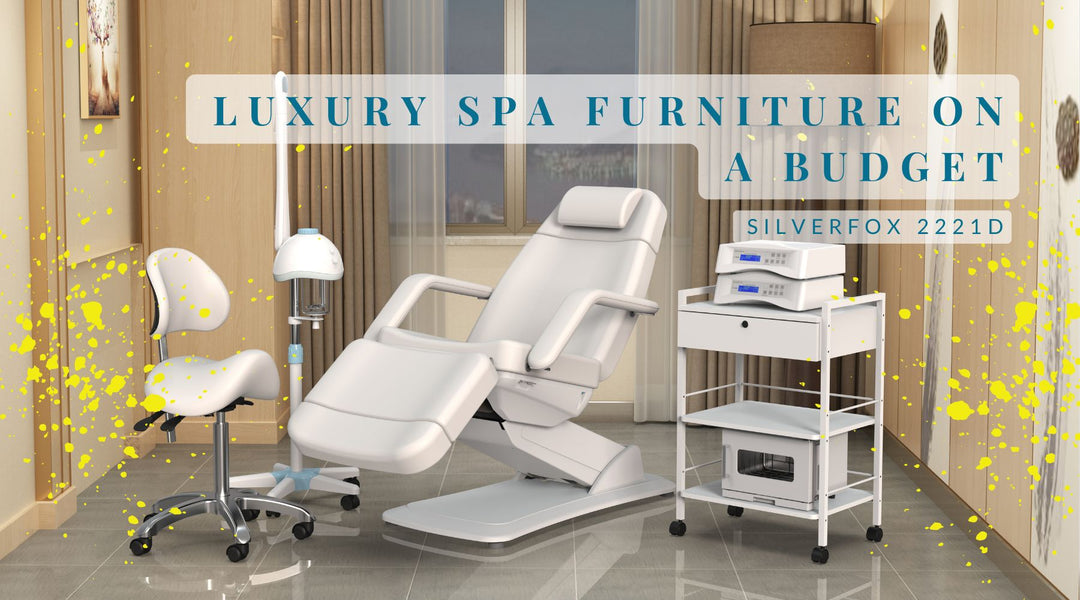

Electric VS Hydraulic Facial Beds: Which is Right for Your Spa?

Choosing between an electric and hydraulic facial bed usually comes down to four factors: budget, adjustability, practitioner workflow, and the services you perform.
Choose an electric facial bed if you want powered positioning, frequent adjustments during treatments, greater positioning flexibility, and less manual adjustment for the practitioner.
Choose a hydraulic facial bed if you're working with a tighter budget, don't need powered positioning, or want a simpler chair that doesn't require access to an electrical outlet.
Neither option is automatically right for every spa. Below, we'll compare the differences so you can choose the bed that best fits your services, clients, and budget.
| Factor | Electric Facial Bed | Hydraulic Facial Bed |
|---|---|---|
| Height adjustment | Powered | Hydraulic/pump |
| Back/leg adjustment | Often powered; varies by model | Often manual; varies by model |
| Practitioner effort | Lower during adjustments | More manual adjustment |
| Positioning flexibility | Generally higher | Generally simpler |
| Electrical outlet | Required | Not required |
| Weight/mobility | Usually heavier | Often simpler to reposition |
| Price | Generally higher | Generally lower |
| Best fit | Frequent treatments, adjustability, higher-volume studios | Budget-conscious or simpler treatment setups |
Electric Facial Beds
Electric facial beds use powered motors to adjust one or more positions of the bed. Depending on the model, those controls may adjust height, backrest angle, leg position, tilt, or other functions. For an example of a multi-position electric model see the Silverfox 2246 EBN Electric Med Spa Chair.

Electric facial beds are a good fit for your spa if:
- You reposition clients frequently during treatments.
- Practitioner working height and ergonomics are important.
- You perform multiple types of treatments requiring different positions.
- You want hands-free controls such as foot pedals, where available.
- You're willing to pay more for additional powered adjustability.
Consider the tradeoffs:
- Higher purchase price.
- Requires electrical access.
- Motors and controls add components that can eventually require service.
- Electric beds can be heavy and difficult to move.
Hydraulic Facial Beds
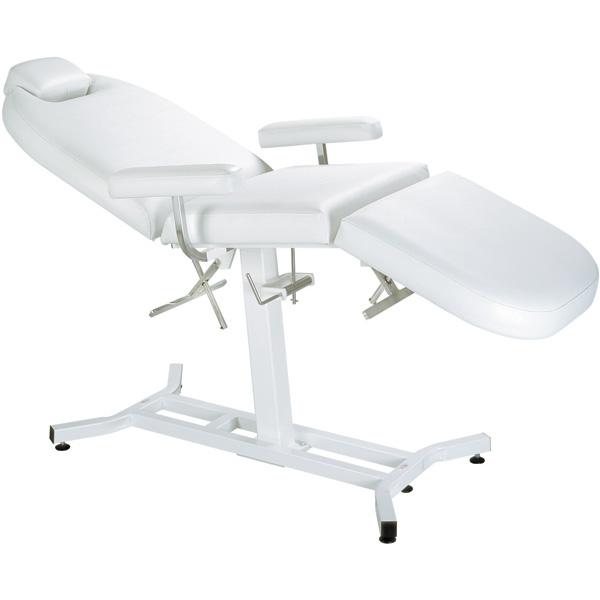
Hydraulic facial beds typically use a hydraulic pump to raise and lower the chair without requiring electricity. Depending on the model, other positions such as the backrest and leg rest may require manual adjustment.
Hydraulic facial beds are a good fit for your spa if:
- You're opening a spa on a tighter equipment budget.
- You don't frequently reposition clients during treatments.
- You don't need multiple powered adjustments.
- You want a setup that doesn't depend on an electrical outlet.
Consider the tradeoffs:
- More manual adjustment may be required.
- Positioning options can be more limited.
- Repeated adjustments may interrupt practitioner workflow.
- Features vary considerably between models.
Important Things to Consider Before Buying a Facial Bed:
Services You Perform
Start with the treatments you actually offer. Facials, waxing, lashes, injectables, massage, and other aesthetic services can require different client positions. Look for a bed that supports the positions you use regularly rather than paying for adjustments you may rarely need.
Practitioner Workflow & Ergonomics
Consider how often you reposition clients during a typical appointment. If you're frequently changing the height, backrest, or leg position, powered adjustments may make your workflow easier. Also consider whether the bed's height range allows you to work comfortably while sitting or standing.
Client Comfort & Accessibility
Look at more than cushioning. Consider the bed's width, height range, weight capacity, entry height, and available positioning options. Think about the range of clients you serve and how easily they can get onto, off of, and remain comfortable on the bed.
Space & Electrical Access
Measure your treatment room before ordering. Consider the bed's dimensions in both upright and extended positions, the space you'll need to move around it, and where electrical outlets are located if you're considering an electric model.
Budget & Total Cost
Compare more than the purchase price. Shipping, warranty coverage, expected usage, durability, and the features you'll actually use all affect the real value of the bed. A more expensive electric model may make sense for a busy treatment room, while a simpler hydraulic model may provide everything another practitioner needs.
Warranty & Support
Review warranty coverage, replacement-part availability, and who you'll contact if something goes wrong. This becomes particularly important with electric beds because motors, controls, and other powered components add complexity.
Frequently Asked Questions about Electric vs. Hydraulic Facial Beds
Q: Is an electric or hydraulic facial bed better for an esthetician’s back?
A: Either can be a major improvement over a fixed-height treatment table because the goal is to bring the client to a comfortable working height rather than constantly bending or reaching. Electric beds generally make frequent adjustments easier because the practitioner can reposition the bed using powered controls. A hydraulic bed can still provide valuable height adjustment without the additional cost of electric motors. Practitioners frequently cite working height and adjustability as important factors in reducing strain during treatments.
Q: Is an electric facial bed worth the extra cost?
A: It depends on how you work. If you see multiple clients per day, frequently reposition clients, perform several types of treatments, or regularly change working height, powered adjustment may be worth the additional investment. If your treatments require relatively little repositioning, a simpler hydraulic bed may provide the functionality you need at a lower price. Practitioners discussing equipment purchases often weigh the initial cost against adjustability, ergonomics, and how frequently they'll actually use the additional features.
Q: What weight capacity should I look for in a facial bed?
A: Choose a bed that safely accommodates the range of clients you expect to serve, and always follow the manufacturer's stated working-weight capacity. Don't assume all facial beds are alike: capacities can vary substantially between models. Practitioners specifically raise weight capacity as a buying concern because they want clients of different sizes to feel safe, secure, and comfortable using their equipment.
Q: What features matter most when choosing a facial bed?
A: Start with your actual services and workflow. Important factors can include working-height range, back and leg positioning, weight capacity, bed width and length, client entry and exit, controls, rotation, upholstery, room size, and whether clients need to lie flat or face-down. A practitioner doing facials, waxing, lashes, or body treatments may need a different setup than someone primarily performing injectables or electrolysis.
Q: Should I buy a facial bed based on client comfort or practitioner ergonomics?
A: Both. Clients need to feel supported and comfortable during treatment, but the bed is also a piece of working equipment you'll use repeatedly throughout the day. Look for a bed that lets you position different clients comfortably while also allowing you to work without unnecessary bending, reaching, or awkward posture. Practitioner discussions repeatedly bring up this tradeoff—especially during long services and when working with clients of different heights, sizes, or mobility levels.
Ready to Find the Right Facial Bed for Your Spa?
Choosing between electric and hydraulic is only part of the decision. The right facial bed should fit the treatments you perform, your preferred working height and positioning, your clients, your treatment room, and your budget.
Sunlight Spa Supply carries professional facial beds and esthetician chairs with a range of positioning options, features, and price points. Compare the options below, or contact us if you'd like help narrowing down the right fit for your practice.